What's Actually Living in Your Unfolded Sheet Pile
There is something living in your sheet pile. Not metaphorically. Not as a figure of speech. Literally, biologically, microscopically — your unfolded sheets are hosting a population of things you would rather not think about.
We're going to make you think about them anyway. You're welcome.
The Pile Is an Ecosystem
That stack of sheets in the corner of your bedroom — or stuffed in the back of your linen closet, or draped over the chair that exists in every bedroom solely for this purpose — is not just laundry. It's a warm, dark, slightly humid environment. Which is, unfortunately, exactly what certain microscopic guests are looking for.
Dust mites are the most common inhabitants. They're invisible to the naked eye, they feed on dead skin cells, and they absolutely love fabric. A single gram of dust can contain up to 1,000 dust mites. Your sheet pile weighs considerably more than a gram. And unlike houseguests who eventually leave, dust mites have no such courtesy.
They reproduce quickly, they're nearly impossible to evict without a thorough wash, and they produce waste particles that become airborne and get inhaled while you sleep. That slight stuffiness you feel in the morning? Could be your sheet pile saying hello.
It Gets Worse
Dust mites are relatively harmless on their own — unless you have allergies or asthma, in which case they're a significant trigger. But they're not alone in there.
Sheets that aren't stored properly can also accumulate pet dander, pollen, and mold spores — particularly if they're stored in a damp environment like a bathroom closet or basement. Mold spores are opportunistic. Give them fabric, a little moisture, and some time, and they'll make themselves at home faster than you'd like to imagine.
There's also the question of cross-contamination. If your sheet pile is on the floor, on a bedroom chair, or anywhere near a pet's favorite resting spot, you're adding a whole additional layer of biological material to the mix. Dog hair, cat dander, whatever your pet tracked in from outside — all of it finds its way into fabric and stays there.
And then there's the matter of whatever came off your body the last time you slept on those sheets. Dead skin cells, sweat residue, body oils — all of it transfers to the fabric and lingers until the next wash. A pile of unfolded sheets that's been sitting for a few weeks is essentially a compressed record of everything your body shed while you were sleeping.
Sweet dreams.
The Science of Sheet Storage
Here's something most people don't think about: how you store your sheets affects how clean they stay between washes. It's not just about folding for the sake of aesthetics — proper storage is actually a hygiene practice.
Studies on textile hygiene consistently show that fabric stored in open, loose piles accumulates airborne particles significantly faster than fabric stored in tight, compact folds. The more surface area exposed to the air, the more opportunity for dust, dander, pollen, and mold spores to settle in.
Humidity is another factor. Fabric that's loosely piled doesn't breathe as evenly as fabric that's neatly folded and stacked. Moisture can get trapped in the pile, creating exactly the kind of environment mold and mildew thrive in. You might pull those sheets out weeks later and wonder why they smell slightly off even though they were freshly washed. Now you know.
Temperature matters too. Linen closets that are warm and poorly ventilated are more hospitable to dust mites than cool, dry spaces. Proper folding and stacking allows air to circulate more effectively between sheet sets, keeping the environment less inviting for anything that shouldn't be living there.
Why Folding Actually Helps
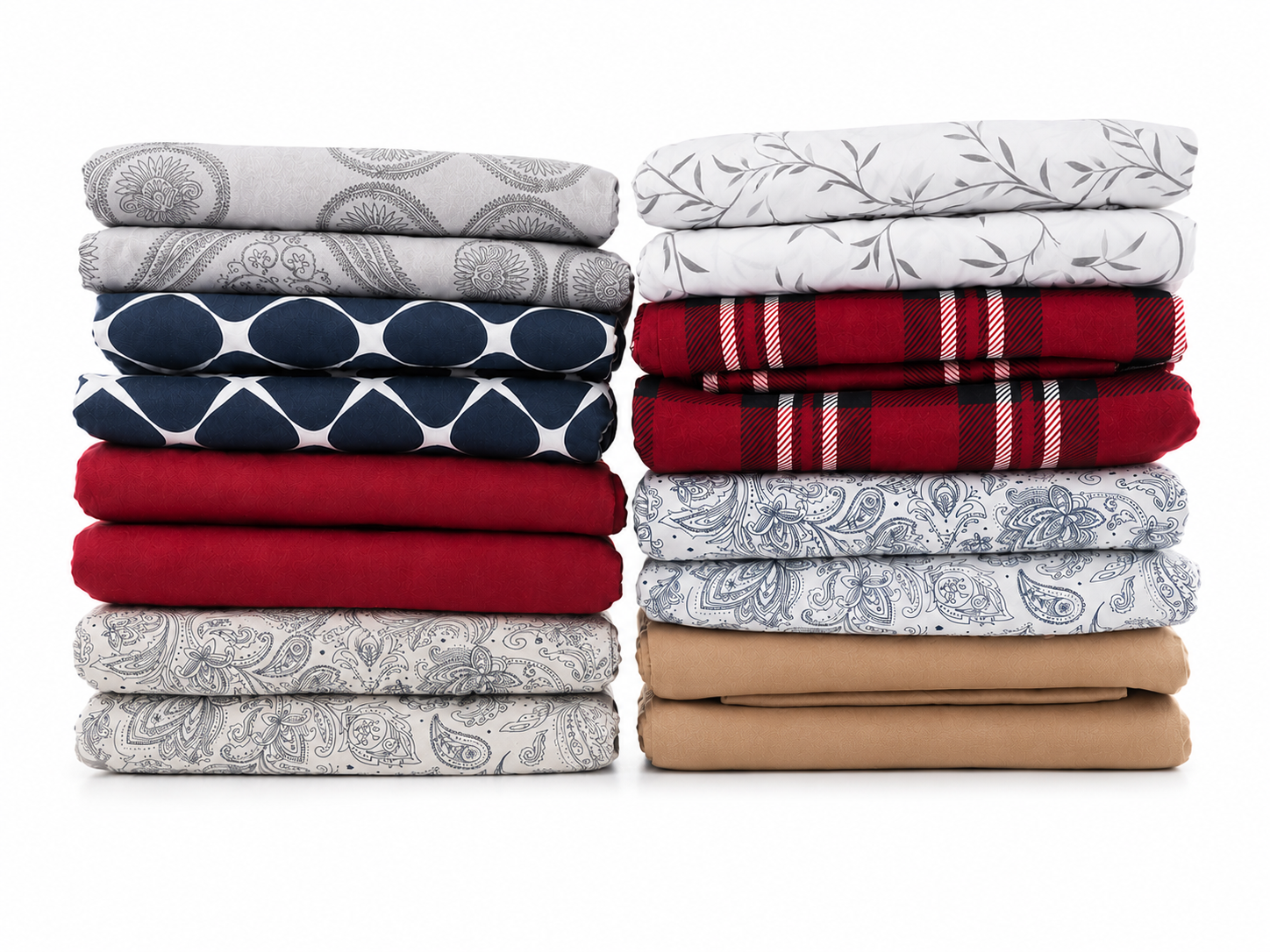
Sheets that are neatly folded and stored in a clean, dry linen closet are significantly less hospitable to dust mites and mold than sheets crammed into a pile. When sheets are folded tightly and stacked, there's less surface area exposed to the air. Less exposure means fewer airborne particles settling into the fabric between uses.
It also means your sheets stay fresher longer between washes — which matters practically, because most people aren't washing their sheets as often as they probably should. If your storage method is working against you, you're starting at a disadvantage before your sheets even hit the mattress.
A neatly folded sheet set also makes it easier to actually rotate your sets regularly. When your linen closet is organized and your sheets are stacked in a way that makes sense, you're more likely to use them in rotation — which means more frequent washing overall, which means fewer microscopic roommates.
What Hotel Housekeeping Knows That You Don't
Hotels are meticulous about linen storage for exactly these reasons. It's not just about appearances — though that's certainly part of it. It's about hygiene standards. Hotel linen rooms are cool, dry, and organized with military precision. Sheets are folded immediately after laundering, before they have a chance to sit in a pile and start accumulating anything. They're stacked in rotation so that every set gets used and washed on a regular schedule.
The result is that hotel sheets feel and smell consistently clean in a way that home sheets often don't — even when both have been recently washed. The difference isn't just the washing. It's everything that happens after.
The Solution Is Simpler Than You Think
We're not suggesting you develop a clinical obsession with sheet hygiene. We're suggesting you stop leaving your sheets in a pile and start storing them properly — folded, stacked, and clean.
If the folding part is what's standing between you and a tidy linen closet, that's exactly what we're here for. At The Sheet Spot, we return your sheets folded to hotel-quality precision, wrapped in tissue, and ready to slide straight onto your shelf. No pile. No mystery inhabitants. Just clean, crisp sheets that look and smell exactly like they should.
Because life is too short to share your linen closet with things that don't pay rent.


Comments