Why Your Sheets Smell Weird (And How to Fix It)
You washed your sheets. You know you washed them — you were there, you put them in the machine, you used detergent, you did everything correctly. And yet somehow, when you pull them out of the closet or unfold them onto the bed, there's a smell. Not a terrible smell. Not a smell you could easily describe to another person. Just a smell that isn't quite right, that doesn't match the clean, fresh sheets you were expecting.
This is one of the most common and least discussed laundry frustrations in existence. And it has several very fixable causes.
The Washing Machine Itself
Here's the uncomfortable starting point: your washing machine may be part of the problem. Modern front-loading washing machines in particular are notorious for developing mold and mildew in the drum, the gasket, and the detergent drawer — areas that stay damp between cycles and don't get adequate airflow.
If your machine has a smell — even a faint one — it transfers to everything you wash in it. Your sheets come out of a clean cycle smelling slightly off because the machine itself isn't clean. This is more common than most people realize and more fixable than most people know.
Running a monthly cleaning cycle with a washing machine cleaner tablet, or a cup of white vinegar and a half cup of baking soda on a hot empty cycle, removes the buildup and eliminates the source of the smell. Leaving the machine door open between cycles to allow the drum to dry out prevents the problem from returning.
Front-loader gaskets — the rubber seal around the door — are a particular culprit. Wipe them down regularly with a damp cloth and check for visible mold growth. It's not glamorous, but it makes a significant difference.
Too Much Detergent
This one surprises people: using too much detergent is one of the most common causes of sheets that smell strange after washing. It seems counterintuitive — more soap should mean cleaner, right?
Wrong. Excess detergent doesn't rinse out completely, particularly in high-efficiency machines that use less water. The residue stays in the fabric and becomes a breeding ground for bacteria and mildew — particularly when the sheets are then folded and stored while still holding that residue.
The smell that results is often described as musty, sour, or vaguely chemical — a combination of detergent residue and the biological activity happening within it. It's not pleasant, and it doesn't go away with another wash unless you address the root cause.
Use less detergent than you think you need. High-efficiency detergents are concentrated and a small amount goes a long way. If you've been using a full cap or more, try cutting it in half and see what happens to your sheets.
Not Drying Completely
Sheets that go into storage even slightly damp will develop a musty smell within days. This is one of the most common causes of the mysterious linen closet smell — sheets that felt dry when you folded them but retained just enough moisture to allow mildew to begin developing in storage.
The fix is straightforward but requires patience: make sure your sheets are completely, thoroughly dry before folding and storing them. Not warm-from-the-dryer dry — actually dry. If you're not sure, give them an extra ten minutes in the dryer or hang them for an hour before folding.
Thick sheet sets, particularly those with deep-pocket fitted sheets or heavier fabric weights, take longer to dry than they appear to. The outer layers can feel dry while moisture is still trapped in the folds. Don't be fooled.
Storage Conditions
Where and how you store your sheets affects how they smell between uses. A damp, poorly ventilated linen closet will make even perfectly clean sheets smell stale within a few weeks. Sheets stored in plastic bins or airtight containers don't breathe properly and can develop a closed, musty odor over time.
Ideal sheet storage is cool, dry, and ventilated. Open shelves in a well-ventilated closet are better than sealed containers. If your linen closet is in or near a bathroom, the humidity from showers and baths is working against you — a small moisture absorber in the closet can help significantly.
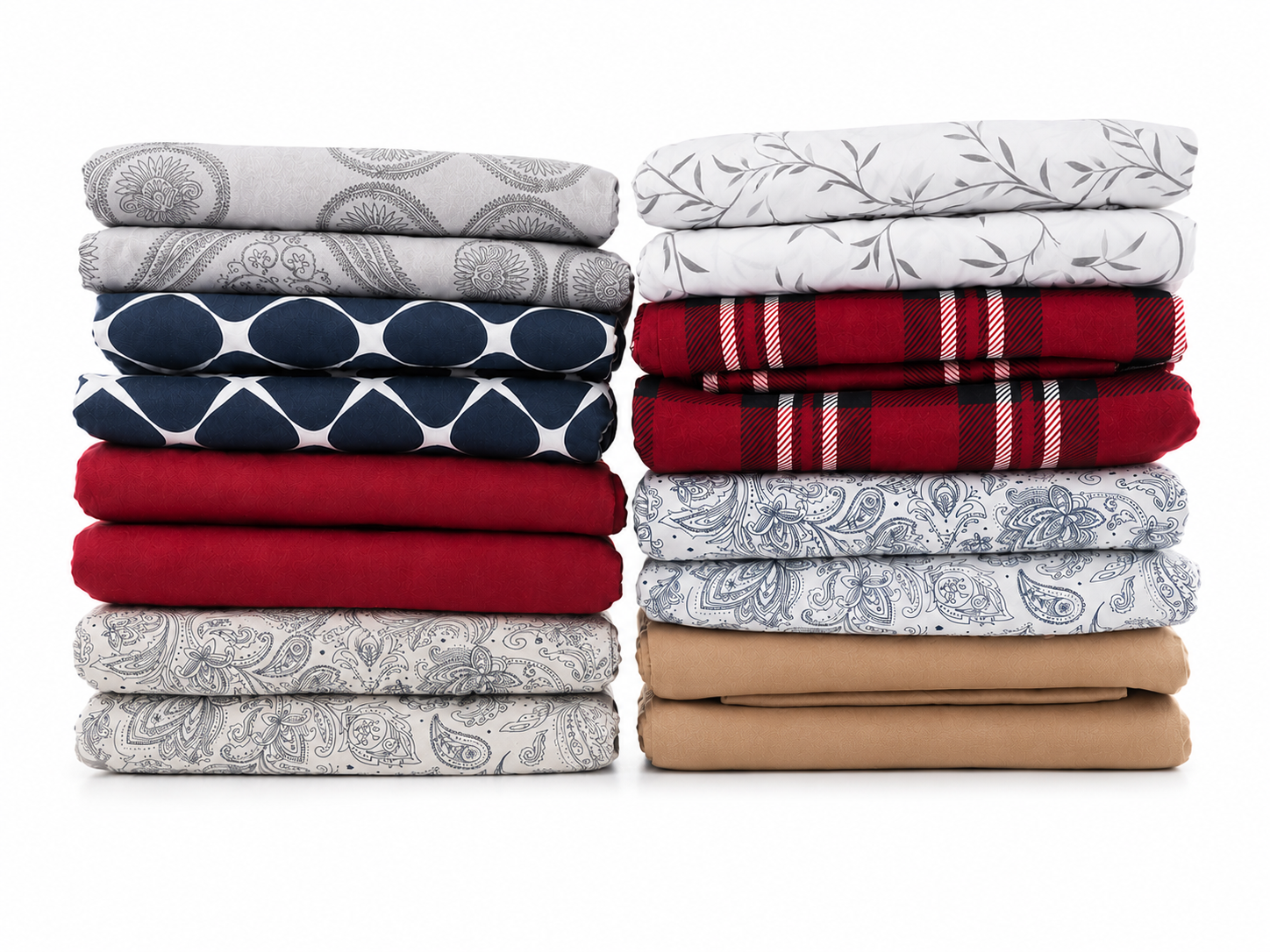
Folding also plays a role here. Sheets that are tightly and neatly folded have less exposed surface area, which means fewer airborne particles settling into the fabric between uses. Loosely piled sheets accumulate dust, dander, and airborne odors faster than neatly stacked ones. It's a small difference on any given day, but it compounds over the weeks between washes.
Hard Water
If you live in an area with hard water — water with a high mineral content — it can affect how your sheets smell and feel after washing. Hard water leaves mineral deposits in fabric that can produce a slightly metallic or flat smell and make sheets feel stiffer and less fresh than they should.
A water softener is the comprehensive solution, but not everyone has access to one. Adding a cup of white vinegar to the rinse cycle helps dissolve mineral deposits and leaves sheets smelling noticeably fresher. It sounds odd, but the vinegar smell dissipates completely in the dryer and what remains is clean, neutral fabric.
The Sheet Age Factor
Sometimes sheets smell weird because they're old. Fabric degrades over time — the fibers break down, the finish wears off, and the material becomes more porous and more hospitable to bacteria and odor. Sheets that have been washed dozens or hundreds of times may simply be past their useful life, and no amount of careful laundering will restore them to freshness.
If you've addressed every other factor and your sheets still don't smell quite right, it may be time to replace them rather than continuing to troubleshoot. Good sheets, properly cared for, should last several years. Sheets that are significantly older than that may be the problem themselves.
Putting It All Together
Fresh-smelling sheets are not complicated to achieve once you understand what's actually causing the problem. Clean your washing machine regularly. Use less detergent than you think you need. Make sure your sheets are completely dry before storing them. Store them in a cool, dry, ventilated space. And fold them properly so they stay fresh between uses.
The folding part is where we come in. At The Sheet Spot, your sheets come back folded to a precise, professional standard — tight, neat, and ready to go straight onto a clean shelf. Properly folded sheets stay fresher longer, which means less rewashing, less frustration, and sheets that actually smell like what clean is supposed to smell like.


Comments