How Hotels Get Their Sheets So Crisp (And Why It's Harder Than It Looks)
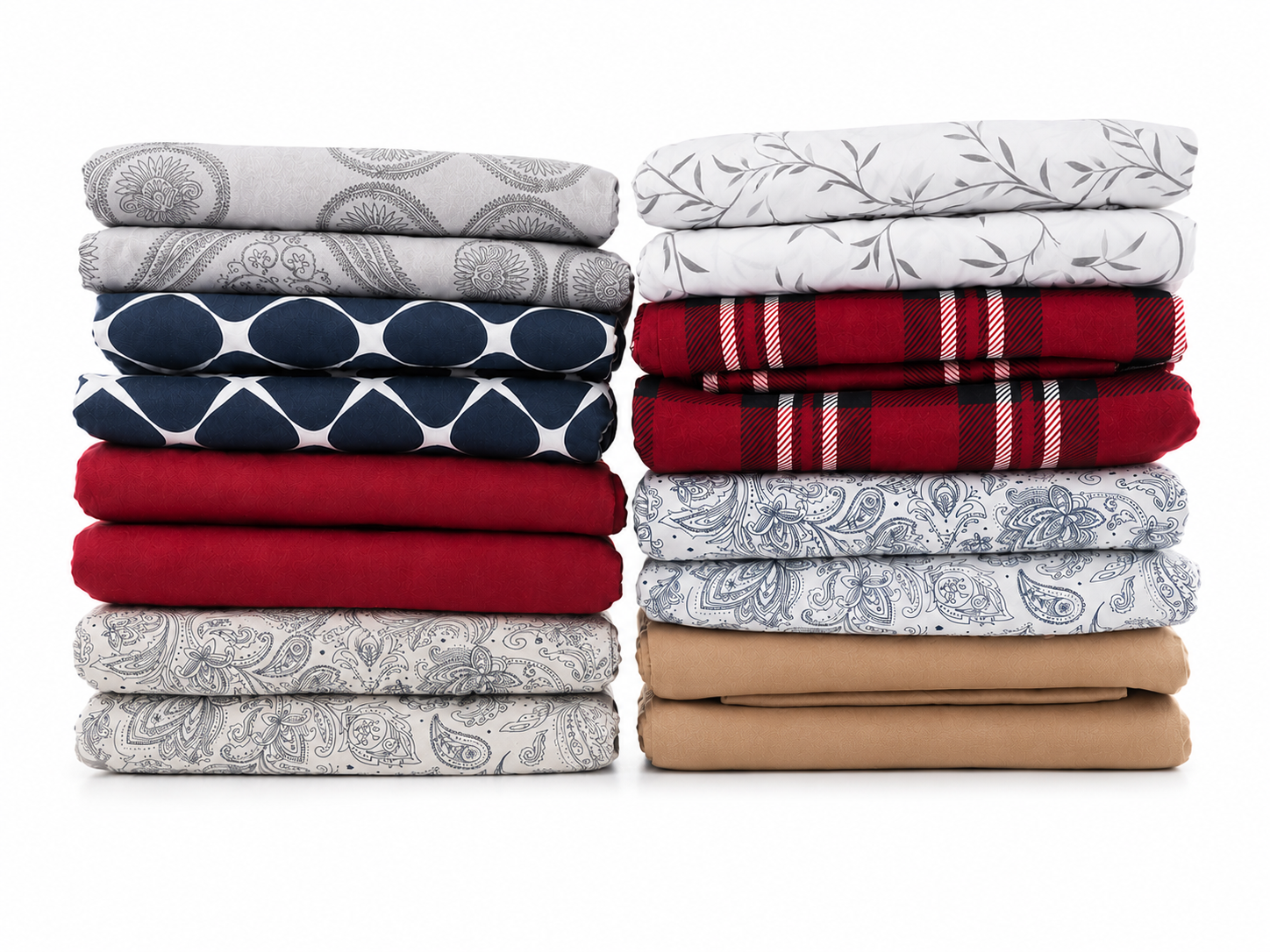
You've stayed in a hotel room and noticed it immediately. The sheets are pulled tight, folded with almost architectural precision, and somehow look like they've never been slept in — even though the room has been occupied approximately 300 times before you arrived. You run your hand across the surface and it's smooth, crisp, and cool in a way that your sheets at home simply never are.
You've probably wondered how they do it. The answer is more interesting than you'd expect — and explains a lot about why your home sheets never quite measure up, no matter how carefully you wash and fold them.
It Starts Before the Washing Even Begins
Hotel linens are not the same as the sheets you buy at a home goods store. Commercial hospitality linens are engineered specifically for repeated industrial laundering. They're woven tighter, finished differently, and designed to withstand the kind of washing cycle that would destroy a standard home sheet set within a few months.
Hotels prioritize durability and crispness over softness. The sheets feel crisp because they're literally built to be crisp, at a fiber level that home sheets simply don't match. Your sheets — whether they're cotton, microfiber, linen, or a blend — have different properties, and no amount of careful washing will make them behave like commercial hospitality linen. That's not a flaw. It's just a different product built for a different purpose.
The Industrial Laundry Process
Hotel sheets don't go through a standard washing machine. They go through commercial laundry equipment that operates at higher temperatures, with industrial-grade detergents, and at a scale that a home machine can't replicate.
The wash temperature alone makes a significant difference. Commercial laundry equipment typically operates at temperatures high enough to fully sanitize the fabric and break down body oils and residue in a way that home washing machines — particularly modern energy-efficient ones — simply can't achieve. Higher temperature washing also affects the fiber structure of the fabric itself, contributing to that crisp, smooth finish.
Commercial dryers are another factor. They run hotter and more evenly than home dryers, which means sheets come out with significantly fewer wrinkles and a more uniform finish. Some hotel laundry operations also use flatwork ironers — enormous industrial pressing machines that sheets are fed through immediately after drying, pressing them completely flat with heat and pressure before they ever get folded.
If you've ever wondered why hotel sheets look almost ironed, it's because in many cases, they literally are.
The Folding Technique
Here's where the human element comes in. Hotel housekeeping staff fold sheets dozens — sometimes hundreds — of times per day. That repetition builds a muscle memory and precision that the average person folding sheets once every week or two simply cannot develop.
Hotel folding technique also benefits from teamwork. Two-person folding is standard practice in professional housekeeping — one person holds while the other folds, the sheet never touches the floor, and every corner is managed deliberately. The result is a tight, precise rectangle that home folding rarely achieves, regardless of how many YouTube tutorials you've watched.
There's also the matter of consistency. Hotels fold every sheet the same way, every time, to the same dimensions. When you're folding sheets at home, you're improvising every single time — adjusting for the sheet moving, for corners escaping, for the fabric bunching in ways you weren't expecting. Professional folders don't improvise. They execute a repeatable process with practiced efficiency.
The Storage and Making Process
Once sheets are folded in a hotel laundry operation, they move to climate-controlled linen storage — cool, dry, and organized by type and size. They're pulled in rotation to ensure every set gets used and laundered regularly. Nothing sits in storage long enough to pick up dust or develop that musty smell that plagues home linen closets.
When a room is being made up, the sheets are placed on the bed using a method that's been standardized and practiced. Hospital corners — the tucking technique that creates those razor-sharp 45-degree folds at the foot of the bed — are executed the same way every time. The result is a bed that looks like a photograph.
What You Actually Can Replicate — And Where We Come In
Most of what makes hotel sheets look the way they do comes down to equipment and scale that simply isn't available outside a commercial laundry operation. The industrial washers, the flatwork ironers, the two-person folding teams — these aren't things you can bring into your home, and they're not things most sheet folding services can offer either.
What can be replicated is the technique. The precise, practiced folding method that hotel housekeeping staff develop over thousands of repetitions — the tight corners, the flat edges, the consistent dimensions — that's a skill, not a machine. And it's a skill that can be applied to your sheets, whatever material they're made of, to produce a result that's dramatically better than what most people achieve folding at home.
At The Sheet Spot, we were trained in hotel folding standards and we apply that same technique to every set we handle. We're not pressing your sheets or running them through commercial equipment. What we're offering is precision folding — the kind that makes your linen closet look intentional and your sheets feel like they've been cared for properly. The best fold your sheets are capable of, done by someone who actually knows how to do it.
That's not nothing. For most people, it's exactly what's been missing.


Comments