Thread Count Is a Lie — Here's What Actually Matters
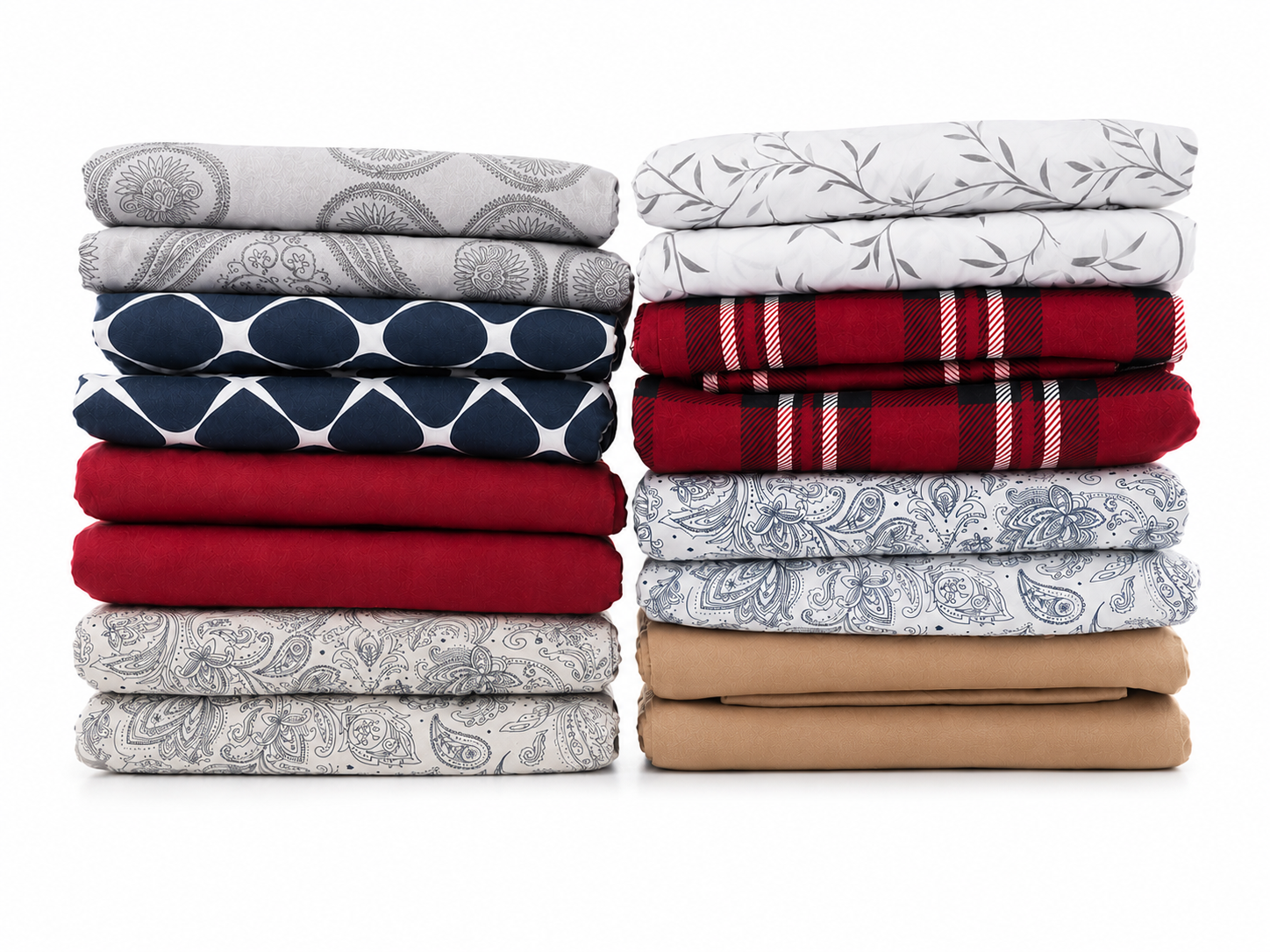
If you've ever stood in a bedding aisle — or scrolled through an endless page of sheet listings online — you've encountered the thread count arms race. 300. 600. 800. 1,200. The numbers climb higher and the marketing copy gets more breathless, and somewhere in the back of your mind you've absorbed the idea that more threads equals better sheets.
It doesn't. Thread count is one of the most successfully perpetuated myths in the home goods industry, and it has been costing people money and disappointment for decades. Here's what's actually going on — and what you should be paying attention to instead.
What Thread Count Actually Means
Thread count is, technically, a real measurement. It refers to the number of threads woven into one square inch of fabric — both horizontally and vertically combined. A sheet with 150 threads running in each direction would have a thread count of 300. Simple enough.
The problem is what happened to this measurement once marketers got hold of it. Thread count became a shorthand for quality in the consumer consciousness, and manufacturers responded by finding ways to inflate the numbers without actually improving the product.
The most common method is using multi-ply thread — twisting two, three, or four thinner threads together and counting each strand individually. A sheet woven with two-ply thread can technically claim double the thread count of a sheet woven with single-ply thread of identical quality. The fabric isn't better. The number is just bigger.
Some manufacturers go further, counting picks — the individual fibers within a thread — rather than the threads themselves. This can produce thread count claims in the thousands that bear essentially no relationship to the actual quality or feel of the fabric.
The result is that a sheet marketed as 1,200 thread count can feel worse than a well-made 400 thread count sheet. The number has become almost meaningless as a quality indicator.
What the Industry Actually Knows
Here's what textile experts and bedding industry insiders will tell you when they're not trying to sell you something: the sweet spot for quality sheets is generally between 200 and 600 thread count, depending on the fiber.
Above 600, you're typically paying for marketing rather than quality. The fabric often becomes heavier, less breathable, and less comfortable — particularly in warmer climates or for people who sleep hot. The sheets that feel luxurious in a five-star hotel are rarely above 400 thread count. What makes them feel that way has almost nothing to do with the number.
What Actually Matters
If thread count isn't the right metric, what should you be looking at? Several things, as it turns out — and none of them fit as neatly on a marketing label.
Fiber quality is the single most important factor. The best sheets in the world are made from long-staple cotton — Egyptian cotton and Pima cotton being the most well-known varieties. Long-staple means the individual cotton fibers are longer, which means they can be spun into finer, stronger, smoother thread. The result is fabric that feels better, lasts longer, and gets softer with washing rather than pilling and degrading.
Short-staple cotton — which is what most budget sheets are made from — produces coarser thread, rougher fabric, and sheets that deteriorate relatively quickly. No thread count manipulation changes this fundamental reality.
Weave type matters significantly as well. Percale and sateen are the two most common sheet weaves, and they produce very different results. Percale is a simple one-over-one-under weave that produces a crisp, cool, matte finish — the kind of sheet that feels fresh and clean against your skin. Sateen uses a four-over-one-under weave that produces a silkier, slightly heavier fabric with a subtle sheen. Neither is objectively better — it depends entirely on what you prefer to sleep on.
Finishing is the factor that almost nobody talks about. How a sheet is finished after weaving — the chemicals used, the processes applied, the way it's treated before it reaches you — affects both how it feels initially and how it ages over time. Some sheets are treated to feel soft in the store and deteriorate quickly after washing. Better quality sheets often feel slightly stiffer at first and become genuinely softer over time as the fibers break in.
Breathability is worth considering based on your sleeping habits. Tightly woven high thread count sheets tend to trap heat. If you sleep hot, a lower thread count percale sheet in long-staple cotton will almost certainly make you more comfortable than an 800 thread count sateen regardless of what the marketing says.
The Practical Takeaway
Next time you're shopping for sheets, ignore the thread count headline and look for these things instead: long-staple cotton (Egyptian or Pima if budget allows), a weave type that matches your preference, and a brand that's transparent about its materials and manufacturing rather than leading with inflated numbers.
A well-made 300 thread count percale sheet in Egyptian cotton will outperform a 1,200 thread count sheet made from short-staple multi-ply cotton in almost every meaningful way — feel, durability, breathability, and how it looks after twenty washes.
And Once You Have Good Sheets
Here's the thing about investing in quality sheets — they deserve to be taken care of properly. Washed correctly, stored properly, and folded in a way that keeps them looking like the investment they are.
At The Sheet Spot, we fold your sheets to a precise, professional standard regardless of what they're made of. Good sheets folded well last longer, store better, and feel more satisfying to put on your bed. It's the last step in sheet care that most people skip entirely.
Don't skip it.


Comments